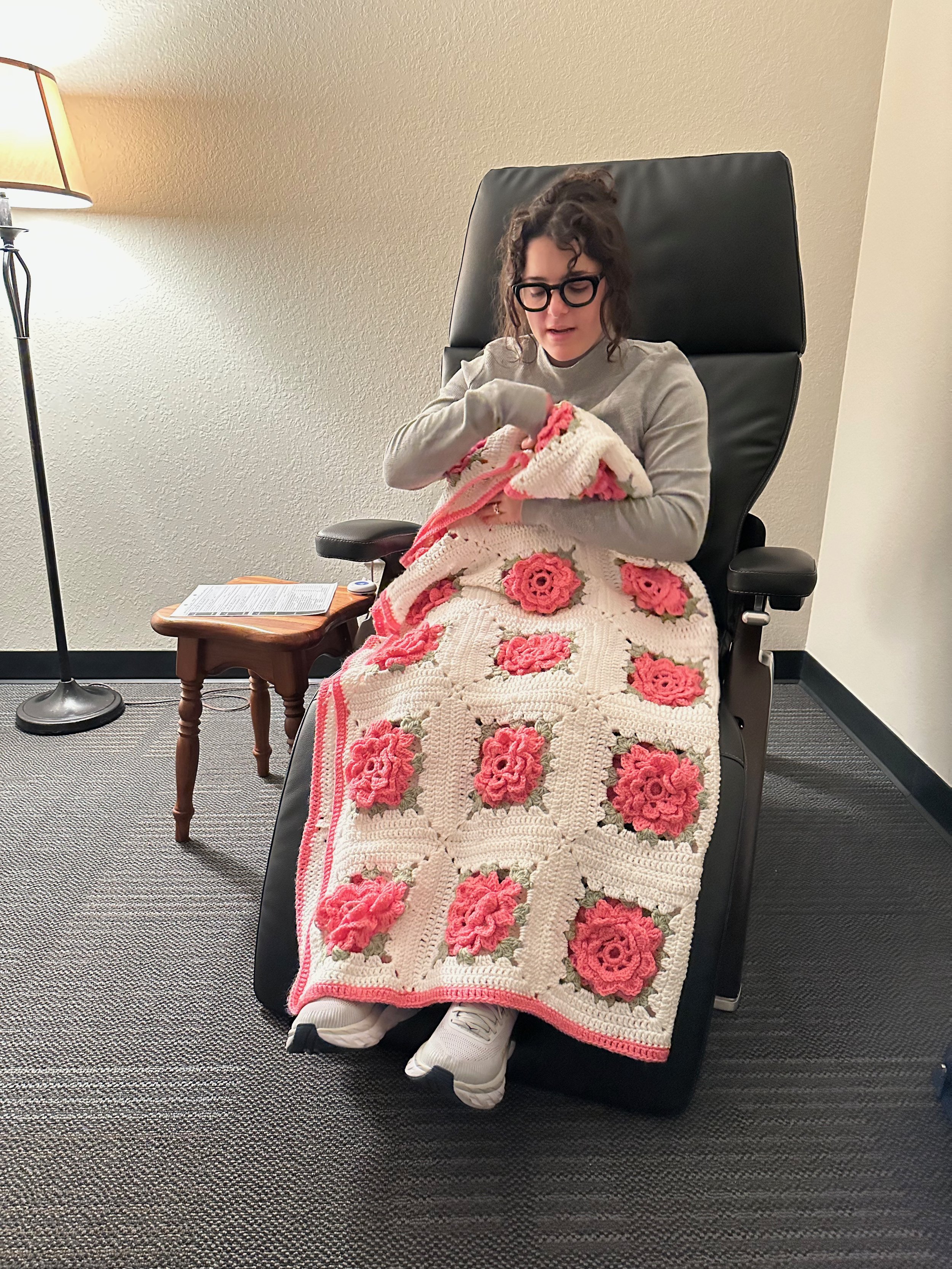
“Someone drowning in six feet of water is just as dead as someone drowning in six inches. Drowning is drowning. You belong here and you deserve treatment just like everyone else.” – Dr. Hannelie at Spero Clinic
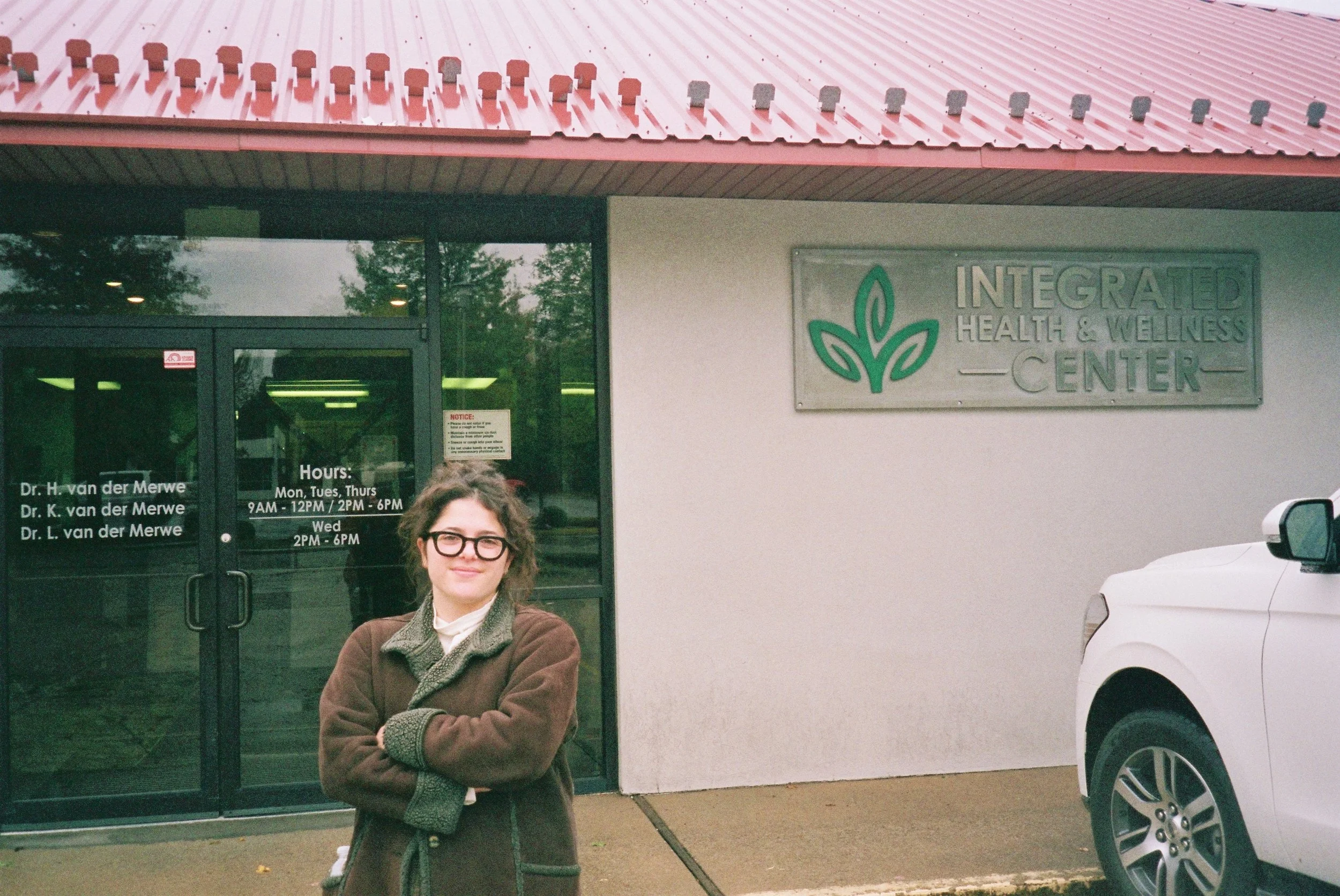
It rained as we walked into my first day at the Spero Clinic; I think that is good luck. As we sat in the waiting room, I was fighting this feeling that I was an imposter. That I didn’t belong there because I wasn’t in as much pain as the other patients I met. I felt choked up the entire day; I was on the verge of tears for hours. I was so isolated in Los Angeles not knowing anyone with CRPS and now I found myself suddenly surrounded by more CRPS patients than I can count — and I still felt like an outsider. I know that if I were to stop taking my medications I would be in excruciating pain just like everyone else; my pain would manifest itself physically as swelling and redness on my leg so everyone could see it, and I would belong. I voiced this to Dr. Hannelie as she was taking my intake X-rays. She reassured me that even though it didn’t look like I was sick, I was just as deserving of pain relief and a chance to have my life back.
One of the first things they did was perform a Static EMG Scan on my back to identify any disturbances to my motor nervous system (which controls the movement of muscles and overall posture). The scan determines how well my motor nerves are functioning and if they are working symmetrically. A few manifestations of central nervous system dysfunction in CRPS include reduced voluntary motor control and increased motor abnormalities. These can cause weakness and atrophy (muscle shrinkage) in affected areas.
My scan results are displayed below.


Figure 1: Displays what the EMG scan would pick up from a “normal” person.
Figure 2: Displays my EMG scan taken on my first day at the clinic. The colored bars indicate the level of severity of abnormality — white is considered within normal limits, while green is mild, blue is moderate, and red is severe.
Figure 3: Displays my EMG scan data as a percentage imbalance, to either the left or right of my spine. The color coding is the same as Figure Two.
After my first week at the clinic I realized how little my old doctors and I actually knew about CRPS. I had no idea a drop in barometric pressure caused flares. I was under the impression that CRPS wasn’t auto-immune related. I thought CRPS couldn’t spread because it was only localized to a specific limb.
I befriended people in wheelchairs and on feeding tubes who suffered from full body CRPS, which affected everything from the bottom of their feet, to their stomach, spine, and eyeballs. Every treatment up to the Spero clinic had failed to bring them relief: pain medications, ketamine, spinal cord stimulators, physical therapy, you name it. They traveled here from all over the world: Australia, England, Canada, Italy, etc. to seek care by professionals who took their pain seriously and who believed they could reach 100% remission.
Unlike me, very few of the patients I met were on pain medication. I struggled to grasp the idea that I was making any real progress. How could my therapists work with my real pain if my medication masked it so well? What effects were my therapies having if my brain and nervous system were shielded by a fortresss of medication? How would I know being pain-free would stick when I stopped taking them?
Dr. Katinka said to think of my pain like water coming through a hose. My pain medications and previous interventions in Los Angeles were merely putting a kink in the hose — as in the medications were dampening the pain signals going to my brain — but the problem was still building at the spigot. The true goal of my treatment should be to turn the water off. Spero is going to heal my nervous system as a whole by calming down my sympathetic nervous system, which will turn down the pressure of the hose until the hose is shut off and there is no pain coming through.
The Spero Clinic has worked to balance my central nervous system through many modalities, including: manual vagus nerve stimulation, frequency-specific microcurrent, and magnetic resonance therapy. The vagus nerve is a key part of your parasympathetic “rest and digest” nervous system. It influences your breathing, digestive function, and heart rate — all of which can have a huge impact on your health. These therapies, as well as some others which I won’t have on my schedule until next month, work together to produce a balancing effect on the autonomic nervous system, which is often called the “fight or flight” part of your nervous system, resulting in enhanced feelings of relaxation. Some calm the natural inflammatory response of the nervous system and restore the autonomic nervous system to optimum function, while others treat pain by using low-level electrical current.
Detoxing is a key component to the treatment process as well. Electro-lymphatic therapy uses an XP2 electro-sound therapy machine to replicate the motions used in manual lymph drainage massage, but improves the lymphatic flow and accelerates detoxification from interstitial tissue at a speed you can't do by hand. The ionic foot detox bath is a therapy that uses negative ions to cleanse the body of toxins. The ions attach themselves to the toxins and then are flushed out through the feet, which are immersed in a saltwater bath. These footpaths are critical because an alkaline body is crucial to a person’s health. Diseases and bacteria thrive in an acidic environment, so the more alkaline, the more effort your body can devote to healing and recovering from other therapies.
I also started my neuromuscular re-education (NMR) therapy, arguably the most important part of rehabilitation here at Spero. My NMR therapist uses external electrodes, which are plugged into an ARP Wave machine, to apply a current to my body in order to normalize (or “modulate”) tissue function of my nervous system. Passing bioelectric current through the negatively charged cells in my body encourages healing by reducing the amount of scar tissue built up over the last year due to compensation, atrophy, and improper healing. The current allows for full elongation of the muscles, ligaments, and nervous system, and aids in improved range of motion. Stimulating the muscles with an electrical current boosts circulation, which can reduce inflammation — an effective way in controlling pain. I will go into more depth on my progress in NMR in my next blog post.
It was my first National CRPS Awareness Day on November 7th. I didn’t feel that I had much to celebrate. I’m not happy I have this syndrome. I am sick of being tired. I am tired of being sick. It’s taken the last year of my life; it took 20 from some people I care about here. To say it is a huge burden for patient and caregiver would be an understatement. We hold so much anger and grief for the old life we had.
I am grateful to be at the Spero Clinic among other CRPS warriors. It’s a slow and cruel recovery that requires unimaginable strength and even more hope. Without hope and patience we wouldn’t be able to get ourselves out of bed in the morning. Without a positive attitude, we’re getting in our own way to remission. It is crucial to recognize and celebrate the small victories because if we focused on remission it would overwhelm us. I am watching people fight for their lives here. Chronic pain is an extremely lonely condition, but at Spero I am part of a community where I don’t have to explain or convince anyone of my pain. People just get it and that is a huge relief.
I am proud to say that I have regained feeling and some control of my toes on my left foot. I was told I would probably never regain feeling over those toes due to nerve damage, but after just four sessions of NMR, I can! I can say with confidence that my pain hasn’t spiked above a 5 since my first week, and even my evening flares are short lived. I am hovering between zero and two pain level each morning, which makes me hopeful. I’ve also made it to 75 in NMR this month.
Again, thank you for following along on my journey towards remission. I will publish an update with details from my second month at Spero soon.
Connor and I have identified the following birds this month: Northern Cardinal, Downy Woodpecker, Red-breasted Nuthatch, Carolina Chickadee, House Finch, Blue Jay